
Mindfulness

Why?

As we approach the home stretch of the school year, I have been reflecting on what I want to do next year, and more importantly, why. Considering the why more than the what helps me to notice what intentions and values I want to take into the next year, more than the logistics and pros-and-cons of pursuing different career paths.

Why do I teach mindfulness? To find that answer I read reflections from my 5th and 6th grade students about how practicing mindfulness has helped them, and here are a few of their responses:

“Mindfulness has helped me when I was sad. Mindful breathing helps me calm down more and realize my next steps. If I was angry and about to yell at someone, if I used mindful breathing it would help me realize that I should not yell.”

“Mindful breathing has helped me when I felt really sick on the day that I had to swim my first really long distance event at my swim meet. I took a couple deep breaths outside and I felt way better after, and I went and swam my event wonderfully!” 

“I normally use mindfulness when I am angry or upset with someone. I just go to my room or just sit and put my head down anywhere and just try to forget about being angry and just focus on my breaths.”

“When I get angry I don’t really think about how my actions will impact others or myself but taking a few breaths helps me to center myself and rethink my actions.” 

“Mindful breathing has helped me choose my behavior when I am upset or angry by allowing me to think through it and be in control of my actions.”

“Mindfulness is really helpful when I’m stressed, because it pulls me back to reality and I feel less heated and worried and just focus on being mindful. It also makes it easier for me to control my anger because instead of realizing afterwards that I’m overreacting or making a big deal I can stop myself and calm down.”

So there is my answer. I teach mindfulness because it feels good. I teach mindfulness because it helps kids. I teach mindfulness because I truly believe that these small, everyday practices that are both so simple and so powerful can change the world, one kid at a time. 

Please watch this excellent, concise (14 minute) TEDx Talk by Kira Willey called Bite-Sized Mindfulness: An Easy Way for Kids to be Happy and Healthy. In the video, she explains how to practice mindfulness with children, but also why to practice mindfulness with children, both the evidence-based research and the physical, social, and emotional benefits for kids and adults. Because you don’t have to spend weeks and months training in a specific curriculum–like I have–to incorporate bite-sized practices into your home or classroom. Each of us can do a little reading, do a little listening, do a little reflecting, and begin sharing this essential gift of mindfulness with the children in your life today.



well-being

Gratitude

img-20180309-wa0002

The arrival of holiday cards has slowed to a trickle, and our days are once again measured in alarm tones and school bells. The house has settled back into mid-day stillness. It’s January–time to take those new resolutions from dinner table talk to daily practice.

My 2018 promises were about doing: learn Japanese! Organize photos into albums! Start a small business! Well, one out of three ain’t bad, and 2018 turned out to be one of the most challenging but rewarding years of my professional life. I don’t think I’ve experienced a year in my career with more twists, turns, tears, and surprises since my first year of teaching back in 2001, and I’m pleased to know that I can be as adaptable now (with three kids! and a puppy!) as I was back then.

While 2018 was a gratifying year of learning for me (unfortunately not Japanese), I hope to focus 2019 into a year of reflection and well-being. As I wrote in my last post Intentions, I resolve to consider each morning, each meeting, each interaction and experience as a chance to choose who I want to be. I want my accomplishments to be the results of well-articulated, meangingful goals, and not simply items on a checklist to be crossed off and tossed aside. I want to remember each day to be a human being, and not simply a human doing.

To that end, I dedicate this year to gratitude. This article by UC Berkeley’s Greater Good Science Center offers evidence-based tips for keeping a gratitude journal to increase daily well-being. The article is brief and helpful, but I offer a few highlights here that were especially meaningful to me:

* Write for only 10-15 minutes a day, 1-3 times a week (too much and it becomes a chore instead of a pleasure).

* Be specific and add details–this will make your experiences more memorable.

* “Be grateful for the negative outcomes you avoided, escaped, prevented, or turned into something positive—try not to take that good fortune for granted.”¹

* Write about the people and experiences that surprised you. Surprises can often be more meaningful than favorites. 

Recording gratitude isn’t just for adults–it’s also a meaningful activity for kids to do individually or for families to do together. So I challenge myself (and you!) to commit to the valuable practice of gratitude in the new year ahead.


¹ Greater Good Science Center. “A Simple Weekly Mindfulness Practice: Keep a Gratitude Journal.” Mindful, Foundation for a Mindful Society, 23 March 2016, http://www.mindful.org/a-simple-weekly-mindfulness-practice-keep-a-gratitude-journal/.

well-being

Intentions

img_20180915_130204-e1537156560323.jpg
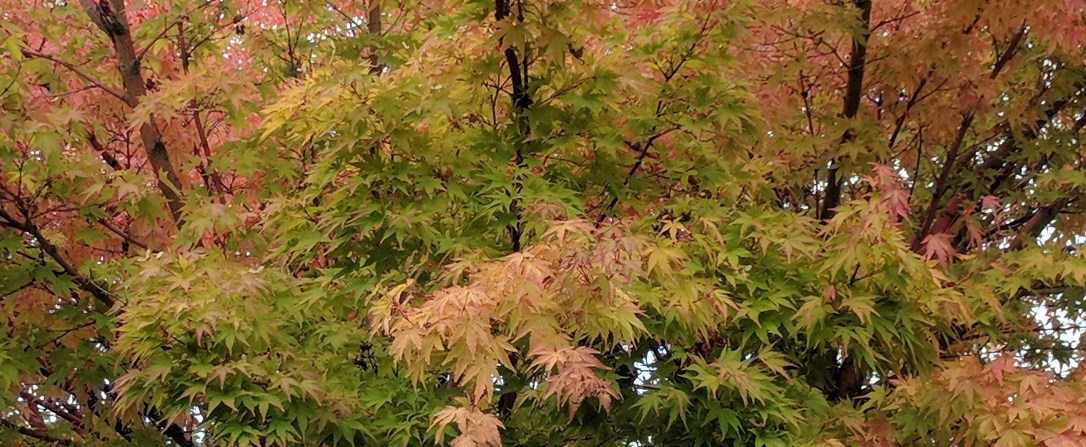
Change is in the air and on the leaves. Wild and carefree summer is turning to cozy and contemplative fall, the season of gratitude and tradition.

In this autumn season of scarves and sweaters and pumpkin-flavored everything, school time routines are settling in, the sun and our children are settling earlier, and it is a wonderful time to reflect on our daily intentions.

Jon Kabat-Zinn writes in his 2011 book Mindfulness for Beginners: Reclaiming the Present Moment–and Your Life that today’s adults are so busy multi-tasking that each of us is “becoming more of a human doing than human being.”* It is easy to be swept away with schedules and responsibilities and to forget the value of simply being.

So as our activities move indoors and crackling campfires turn to cozy hearth fires, let us also turn our intentions inward to nurturing our own well-being. This season of transitions is an inviting time to establish new reflections in your family, which can lead to new conversations around the dinner table or during the bedtime routine.

I offer here a lesson I learned during a week-long mindfulness retreat I attended last month. One of our leaders was Eve Ekman, an emotions researcher for UC Berkeley’s Greater Good Science Center. She shared with us five evidence-based habits that lead to greater well-being if practiced every day:

1. MEDITATE or PRAY

2. EXERCISE

3. Identify three GRATITUDES

4. Perform one random act of KINDNESS

5. Document JOY

These are manageable enough goals for both adults and kids, even in busy family lives. Meaningful meditation or prayer can be done in 10-20 minutes a day, and mild exercise can take only 20-30 minutes a day. My family shares our three gratitudes each night as we tuck our children into bed, so they drift off to sleep thinking about the events in their day for which they are grateful . One deliberate act of kindness every day should be something we all strive to perform ourselves and teach our children. And finally, research shows that noticing joy every day makes a greater impact on our well-being if we share that joyful experience or emotion with another person (perhaps during an evening meal?) or record it in a journal.

Remember when you wake each morning, when you review your schedule of things you need to do, to also set an intention of how you want to be. Every day is a great day to establish new habits, for the happiness and well-being of everyone in your family.

* Kabat-Zinn, J. (2011). Mindfulness for Beginners. Boulder, CO: Sounds True.


Mindfulness

Earth Day

During this week’s mindfulness lesson on Generosity, I asked my 5th grade students to share examples of acts of generosity they either performed or witnessed in the past week. The students told sweet anecdotes along the lines of, “my friend shared her snack with me when I didn’t have one,” and, “I helped my little sister clean her room.” Then one student hesitantly raised her hand and said, “I don’t know if this counts as generosity, but over the weekend my brother’s little league team played a double-header so I was at the park for five hours. I wasn’t interested in watching the games, so instead I spent most of the time picking up trash around the ball fields and playground nearby.”

Just in time for Earth Day, I loved this student’s reminder that YES, we absolutely can and should be generous to our Earth. After all, we are stewards of our planet and of the spaces in which we live. Caring for our Earth can make us feel happy and can also inspire others towards stewardship and environmental activism. This Earth Day, I encourage you to be mindful of how our planet has been generous to humankind with all of her resources, and to consider how we can be generous to the Earth in return.

Happiness, Mindfulness

International Day of Happiness

In 2011 the United Nations General Assembly unanimously adopted resolution 65/309 which recognizes that “the pursuit of happiness is a fundamental goal” and calls for “a more inclusive, equitable and balanced approach to economic growth that promotes sustainable development, poverty eradication, happiness and well-being of all peoples.”

In 2012 the UN General Assembly convened its first ever UN conference on Happiness and adopted a resolution calling for March 20 to be known as the International Day of Happiness. Past years’ themes have included Happy Heroes (2013), Reclaim Happiness (2014), and Climate Action for a Happy Planet (2016).

The 2018 theme for the International Day of Happiness is SHARE HAPPINESS. I love that this is a holiday that is shared around the globe, and one in which adults and children alike can participate. It carries the simple but important message that happiness can be found around us every day, and even the smallest gestures like smiles can spread happiness.

Does that mean that every person is happy every day? No. Does that mean that we stifle our moments of sadness and pretend that everything is okay when it really isn’t? Definitely no. Mindfulness means being aware of all of your feelings, even feelings of sadness, frustration, anger, or fear. It is okay to be sad, and it is okay to cry. Mindfulness gives us the moment of pause that we need to keep from being overpowered by our emotions–to believe that even in our moments of great sadness, that we will find contentment again.

That is what the International Day of Happiness is all about–finding contentment and joy in every day experiences. You don’t need to skip work or school and spend the day riding roller coasters to be happy. Here are some simple pleasures we can take any time to bring happiness to ourselves and to SHARE HAPPINESS with others:

Thank someone you see every day for what they add to your life.

Play a board game or card game in the evening instead of using electronics.

Walk/ride/drive a more scenic route home from work or school. Get some fresh air and enjoy the view.

Call a friend or family member just to catch up.

Pick up trash in your neighborhood streets or park.

Dance along to music while you make a meal in your kitchen.

Forgive someone for a grudge or resentment.

Leave a kind post-it note on the desk of a co-worker or classmate.

Cook for someone who needs a healthy meal or someone who could just use a break.

Spend quality time with a pet and/or a child.

Take a long walk or ride your bike around your neighborhood. Wave to your neighbors.

Enjoy your 2018 International Day of Happiness and remember to SHARE HAPPINESS!

For more information please check out the fantastic resources at http://www.dayofhappiness.net and www.actionforhappiness.org.


You can’t stop the waves, but you can learn to surf — Jon Kabat-Zinn